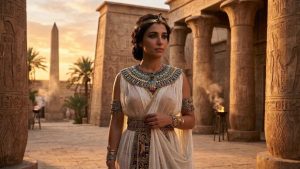
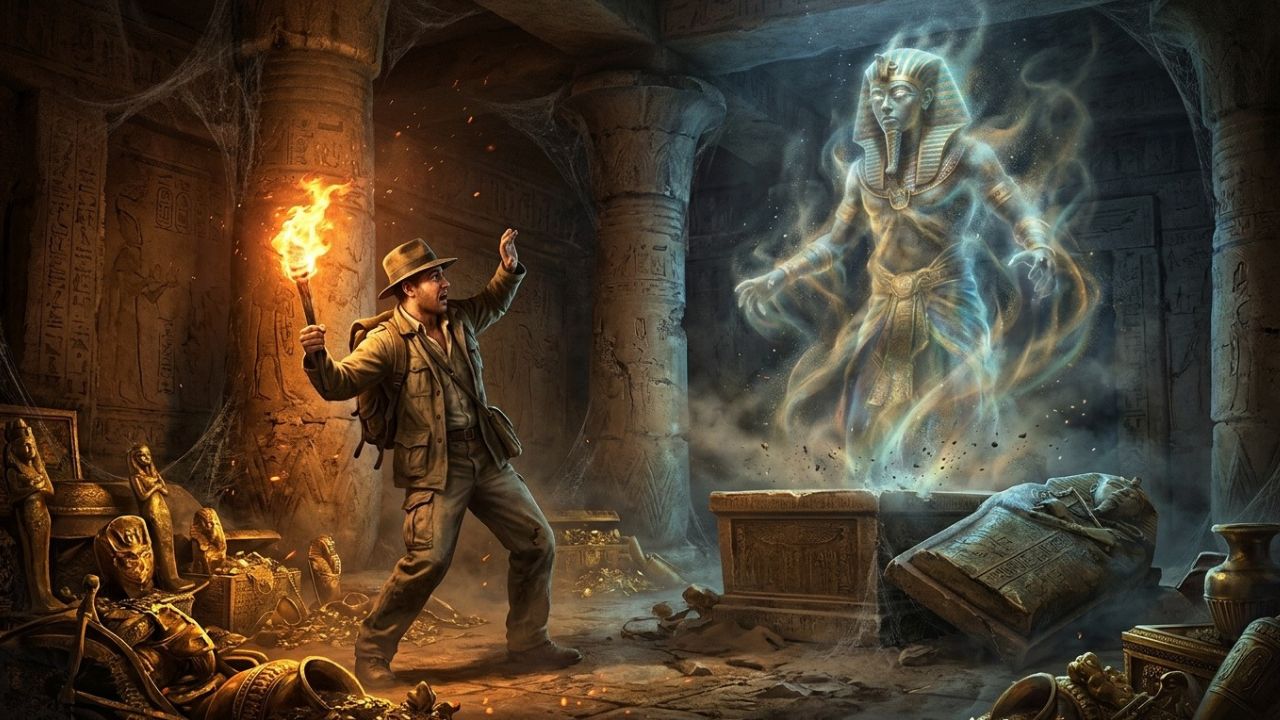
For centuries, humanity has buried its dead, hidden its treasures, and sealed its secrets beneath tons of stone, earth, and sand. We often look at history through the sterile lens of museum glass cases, viewing ancient artifacts as quiet, inanimate pieces of the past. Yet, behind the polished marble and the hushed tones of curators lies a darker, more volatile reality. When modern science and insatiable curiosity collide with ancient burial grounds, the line between historical discovery and supernatural retribution often begins to blur. Across the globe, seasoned archaeologists, hardened by decades of methodical excavation, have encountered phenomena that defy rational explanation. These are not merely stories told around campfire hearths to frighten children. These are documented chilling accounts of strange illnesses, sudden tragedies, and uncanny coincidences that befell those who dared to disturb the eternal slumber of kings, priests, and warriors.
💀 Tutankhamun and the Pharoah’s Vengeance
No discussion of historical maledictions is complete without visiting the dusty sands of the Valley of the Kings in Egypt, where the legendary curse of King Tutankhamun took root. In November 1922, British archaeologist Howard Carter and his financial backer, Lord Carnarvon, made the archaeological find of the century when they breached the intact tomb of the boy king. The atmosphere inside the chamber was intoxicating, filled with gold, jewels, and three thousand years of undisturbed silence. However, joy quickly curdled into dread. According to local lore, a warning was inscribed near the entrance, whispering that death would fleet on wings to whoever disturbed the peace of the pharaoh.
Shortly after the inner burial chamber was unlocked, Lord Carnarvon was bitten by a mosquito on his cheek. The bite became infected, leading to severe blood poisoning and pneumonia. He passed away in a Cairo hotel room at precisely the same moment that all the lights in the city mysteriously flickered out and died. Back in England, Carnarvon’s favorite dog let out a haunting howl and dropped dead. As the years progressed, several other members of the excavation team, along with visiting scientists, succumbed to sudden fevers, mysterious respiratory ailments, and accidental deaths. While skeptics point to toxic molds and ancient bacteria trapped in sealed spaces, the sheer concentration of bizarre fatalities cemented Tutankhamun’s curse in global folklore. To insure the excavation, expeditions back then would have cost upwards of 5,000,000 BRL, which translates to roughly $920,000 in today’s currency, a heavy price for a brush with eternity.
🗡️ The Iron Warning of King Casimir IV
Moving away from the sun-drenched dunes of Egypt to the Gothic echoes of Wawel Cathedral in Poland, we find another chilling chapter written in stone and steel. In 1973, a team of Polish historians and archaeologists received special permission to open the tomb of King Casimir IV Jagiellon. The heavy stone sarcophagus held the remains of the 15th-century monarch, but it also held something far more perilous. As soon as the vault was breached, invisible forces seemed to awaken.
Within a matter of weeks, a devastating pattern emerged among the dozen researchers who had entered the tomb. Over a period of several years, nearly every single member of the team died from rapid, unexplained illnesses or catastrophic organ failure. Epidemiologists later suggested that the tomb was heavily infested with Aspergillus flavus, a toxic mold capable of releasing lethal spores that attack the respiratory system. Yet, the local townspeople and superstitious chroniclers viewed the tragedy through a different lens. They remembered the grim warning carved into the royal crypt: a stern caution against disturbing the dead. The researchers had ignored the physical environment, treating the site as a mere historical puzzle, but the crypt demanded a fatal toll for their intrusion.
📜 The Broken Tablet of Curse at Kish
Deep in the historical cradle of Mesopotamia, within the ancient Sumerian city of Kish in modern-day Iraq, archaeologists stumbled upon a relic that spoke of curses not in the future, but from the ancient past itself. During excavations led by joint Anglo-American expeditions in the early 20th century, researchers uncovered a cuneiform tablet explicitly designed to invoke supernatural wrath upon enemies. The artifact detailed elaborate ritualistic maledictions meant to rot the bones, crush the skulls, and wipe out the bloodlines of anyone who dared to deface sacred property or disrupt divine order.
Shortly after the tablet was cataloged and removed from its resting place, the expedition was plagued by a relentless string of disastrous misfortunes. Camps were battered by freak sandstorms that destroyed months of painstaking grid work, equipment mysteriously malfunctioned, and team members suffered from sudden, debilitating bouts of tropical fevers. Some laborers even abandoned the site entirely, swearing that they could hear phantom whispering echoing from the trenches at night. The clay tablet, barely larger than a human palm, carried a resonance of malice that transcened millennia, proving that ancient scribes possessed a profound understanding of psychological and physical terror.
🌊 The Submerged Wrath of China’s Terracotta Army
While the Terracotta Army of Emperor Qin Shi Huang in Xi’an, China, is celebrated as a monumental triumph of ancient artistry, its discovery was shrouded in eerie omens and local apprehension. In 1974, local farmers digging a water well accidentally struck the hardened clay shoulder of a life-sized soldier, kicking off one of the greatest archaeological digs in human history. Thousands of unique warriors, horses, and chariots emerged from the earth, guarding the grand mausoleum of China’s first emperor.
However, the farmers and villagers who lived near the burial mound were initially terrified of the discovery. They believed that disturbing the subterranean garrison would unleash the restless spirit of the tyrannical emperor, who was notorious for his brutal rule and paranoia regarding death. Shortly after the excavation began, strange agricultural blights struck the surrounding region, and several key supervisors associated with the early phases of the project fell violently ill with un-diagnosed ailments. Although modern tourism now flourishes around the site, generating millions of dollars, the initial days of the unearthing were heavy with the heavy psychological burden of waking an ancient imperial guard.
🔮 The Crystal Skull and the Maya Underworld
In the dense, suffocating jungles of Central America, the ruins of Lubaantun in Belize yielded an artifact that has haunted treasure hunters and anthropologists for generations: the mysterious crystal skull. Discovered in the 1920s by archaeologist F.A. Mitchell-Hedges and his adopted daughter Anna, the skull was carved from a single block of clear quartz with astonishing precision. According to local Mayan descendants, the object was not merely an artistic masterpiece, but a ritual tool capable of inducing visions, death, and profound psychological disturbance.
Anna Mitchell-Hedges claimed that whenever she sat near the skull, she experienced vivid, terrifying hallucinations of ancient Mayan sacrificial rituals, accompanied by piercing auditory echoes. Furthermore, visitors to the estate where the skull was temporarily housed reported feeling sudden surges of inexplicable dread, severe dizziness, and sleep paralysis. Modern scientific analysis later revealed microscopic tool marks on the quartz, but the aura of mystery surrounding the artifact has never dissipated. To safely transport and study such disputed artifacts in high-security modern facilities, institutions routinely allocate budgets surpassing 100,000 BRL, which amounts to roughly $18,400, ensuring that the objects remain under lock and key, far away from vulnerable minds.
🏔️ The Ice Maiden of the Andes
High up in the freezing, thin air of the Peruvian Andes, the discovery of the Juanita Mummy offered a breathtaking glimpse into the sacrificial practices of the Inca Empire. Discovered in 1995 by anthropologist Johan Reinhard and his climbing partner Miguel Zárate on the slopes of Mount Ampato, the frozen body of a young girl was remarkably preserved by the sub-zero temperatures. She had been offered as a capacocha sacrifice to appease the mountain gods over five hundred years ago.
While the scientific value of the find was immeasurable, the expedition was marked by an unsettling series of environmental anomalies. Right as the team reached the summit and uncovered the burial site, the weather shifted with terrifying speed. A nearby volcano, Mount Sabancaya, which had been dormant for centuries, suddenly began to erupt, raining ash and smoke over the expedition. The climbers had to make a harrowing, life-or-threatening descent through falling debris and blinding blizzards. Reinhard later recalled feeling an overwhelming sense of sadness and heavy pressure, as if the mountain itself was actively rejecting their presence. The Ice Maiden was pulled from her icy sanctuary, but the fierce reaction of the elements left an indelible mark on all who participated.
⚡ The Curse of the Ghostly Shipwreck of Antikythera
Deep beneath the turbulent waters near the Greek island of Antikythera, sponge divers in 1900 made a discovery that would forever change our understanding of ancient technology: the Antikythera mechanism, an intricate analog computer dating back to the 2nd century BCE. However, the retrieval of the shipwreck from which it came was a saga defined by tragic peril.
The initial salvage operation, conducted by Greek divers using primitive heavy-diving suits, exacted a brutal human toll. One diver died from decompression sickness, commonly known as the bends, and several others were permanently paralyzed during the dangerous underwater recovery missions in treacherous currents. The sea seemed fiercely protective of its sunken cargo, tossing ships around and sending fierce squalls whenever divers attempted to map the wreck site. Even decades later, modern marine archaeologists using state-of-the-art submersible technology have reported sudden compass malfunctions and electronic glitches while hovering directly over the remains of the ancient vessel. Whether driven by rough seas, human error, or an enduring maritime malediction, the Antikythera shipwreck remains a testament to the fact that some secrets of the deep are meant to remain untouched.
🔍 Conclusion: Science Versus the Shadows
Ultimately, the enduring fascination with archaeological curses lies at the intersection of human psychology and the profound mystery of time. When we peel back the layers of earth and disturb the resting places of ancient civilizations, we are not just unearthing pottery, gold, and bones. We are confronting the raw, concentrated intentions of people who desperately sought to protect their dignity and their resting places from the prying hands of future generations. Whether explained by toxic mold, psychological suggestion, or genuine metaphysical forces, these seven terrifying accounts remind us that history is not a dead, passive thing. It is a living, breathing entity that can bite back when provoked.