
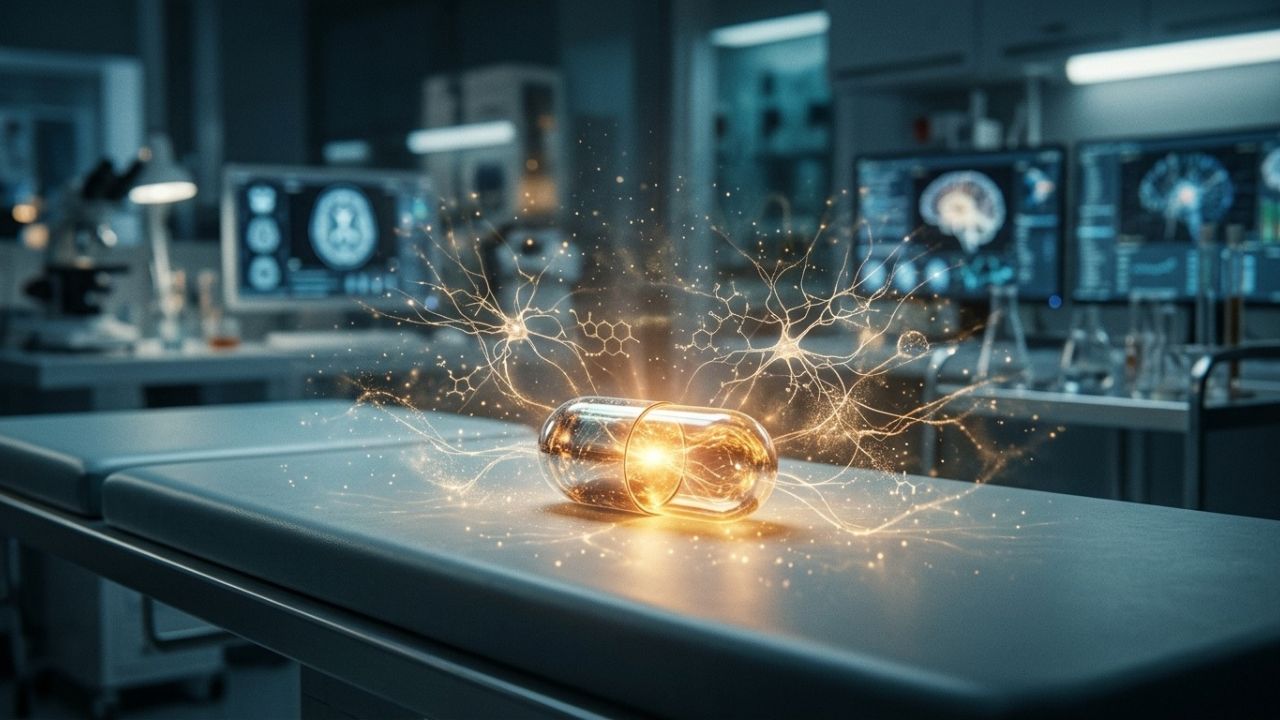
For decades, modern medicine has treated the mind and the body as distinct entities, separating the cold science of pharmacology from the elusive realm of human belief. Yet, inside clinical trials and hospital rooms across the globe, a quiet revolution is taking place. The placebo effect, long dismissed as mere statistical noise or psychological delusion, is proving to be a biochemical powerhouse. It is not just about feeling better; it is about getting better. As neuroscientists and clinical researchers peer deeper into human biology, they are finding that our expectations can trigger genuine physiological healing, reshaping our understanding of recovery, treatment, and the deep architecture of human consciousness.
To understand the magnitude of this phenomenon, one must first look at how clinical research operates. In randomized controlled trials, researchers compare active medications against inactive substances like sugar pills or saline injections. For years, scientists viewed the improvement in the control group as an annoyance, a confounding variable that clouded the true efficacy of the drug. Today, however, medical science views the placebo response as a fascinating window into the mind-body connection. Patients given an inert substance often experience measurable reductions in pain, lower blood pressure, reduced inflammation, and even shifts in neurotransmitter activity. The brain, it turns out, is its own internal pharmacy, capable of synthesizing and releasing powerful compounds the moment a person believes relief is on the way.
💊 Chemistry in the Mind: How Expectation Becomes Biology
When a patient ingests a pill believing it to be a potent painkiller, the brain initiates a cascade of neurological events. Neuroimaging studies demonstrate that this expectation activates the prefrontal cortex, which in turn signals the periaqueductal gray in the brainstem to modulate pain signals. The result is the endogenous release of opioids, natural pain-relieving chemicals that mimic the effects of prescription narcotics. In trials involving Parkinson’s disease, placebos have been shown to trigger the release of dopamine in the striatum, temporarily alleviating motor symptoms with remarkable precision.
This biological reality means that expectation is physically translated into molecules. When researchers administer a placebo and secretly reverse it using opioid blockers like naloxone, the placebo effect frequently vanishes, proving that the pain relief is mediated by actual chemical receptors rather than mere wishful thinking. In economic terms, the cost of medical research is astronomical, with bringing a new pharmaceutical drug to market often exceeding billions of dollars, translating to roughly $5,450,000,000 in comparative research and development metrics. Yet, the human brain harnesses these multimillion-dollar chemical pathways for free, relying solely on contextual cues, therapeutic rituals, and the deep-seated trust between a healer and a patient.
🏥 The Ritual of Healing: Why White Coats and Pills Matter
The placebo response is not triggered by the pill alone; it is heavily influenced by the entire ritual surrounding medical care. The environment of a clinic, the professional demeanor of a physician, the color and size of a pill, and even its price tag all contribute to the magnitude of the healing response. Studies investigating price perception reveal a fascinating trend. When patients are given identical vitamins, those told the vitamins cost $55 per bottle report significantly greater symptom reduction than those told the exact same vitamins cost only $10.
This behavioral quirk extends directly into surgical wards. In famous orthopedic studies investigating arthroscopic knee surgery for osteoarthritis, researchers performed sham procedures where patients received only an incision without any internal repair. Astonishingly, the patients who underwent the fake surgery experienced the exact same level of pain relief and functional improvement as those who received the actual surgical intervention. These findings challenge the foundational dogmas of modern intervention, suggesting that the symbolic act of treatment can catalyze profound physical recovery independently of the mechanical mechanics involved.
🧬 Genetics and the Placebo Responder
Not everyone responds to placebos with equal intensity, leading geneticists to investigate whether some individuals are biologically predisposed to the placebo effect. Emerging research points toward variations in genes related to neurotransmitter metabolism, particularly catechol-O-methyltransferase or COMT. Individuals with specific genetic profiles exhibit distinct patterns of dopamine and endorphin regulation, making them more susceptible to reward anticipation and stress reduction.
This genetic variability opens up intriguing possibilities for personalized medicine. If clinicians can identify who is a strong placebo responder, they might optimize treatment regimens by combining lower doses of active drugs with strong contextual framing. Furthermore, understanding these genetic markers helps destigmatize the placebo effect, moving it away from outdated notions of hypochondria and into the realm of hard genetics and neurobiology. It highlights that healing is an interactive dialogue between our genetic blueprint and our immediate environment.
🔄 Open-Label Placebos: The Honest Deception
Perhaps the most startling development in recent placebo research is the emergence of open-label placebos. For generations, medical ethics dictated that a placebo could only work if the patient was deceived into believing it was an active drug. However, recent clinical trials for conditions like irritable bowel syndrome, chronic low back pain, and major depressive disorder have challenged this dogma entirely. Researchers are now giving patients pills explicitly labeled as placebos, accompanied by a clear explanation that the pills contain no active medication but that the body can still mount a powerful healing response through conditioned mind-body mechanisms.
The results have stunned the medical establishment. Even when patients know they are taking a sugar pill, they still experience statistically significant symptom relief compared to untreated control groups. This phenomenon suggests that the ritual of taking medicine, combined with the conscious intention to heal, acts as a powerful trigger even without cognitive deception. It redefines our understanding of agency, showing that patients can actively participate in their own healing process with full transparency, opening new ethical and practical avenues for holistic and integrative medicine.
🚀 The Future of Medicine: Integrating Mind and Molecule
As we look toward the future of healthcare, the challenge for medical professionals is how to ethically and effectively harness the placebo effect alongside conventional pharmacology. Rather than viewing placebos as a nuisance to be filtered out of clinical trials, forward-thinking researchers view them as a core component of therapeutic efficacy. Every medical interaction contains an inherent placebo component, and maximizing this component can enhance the performance of active treatments while potentially reducing the dosage and side effects of heavy pharmaceuticals.
Medical schools are beginning to incorporate training on the physician-patient relationship, emphasizing empathy, clear communication, and contextual framing as active clinical tools. By acknowledging that belief is a biological catalyst, modern medicine is bridging the historical divide between mind and body. The placebo effect reminds us that human healing is deeply complex, participatory, and profoundly mysterious. As science continues to decode its mechanisms, we are learning that the most sophisticated healing technology we possess may well be the human mind itself.