
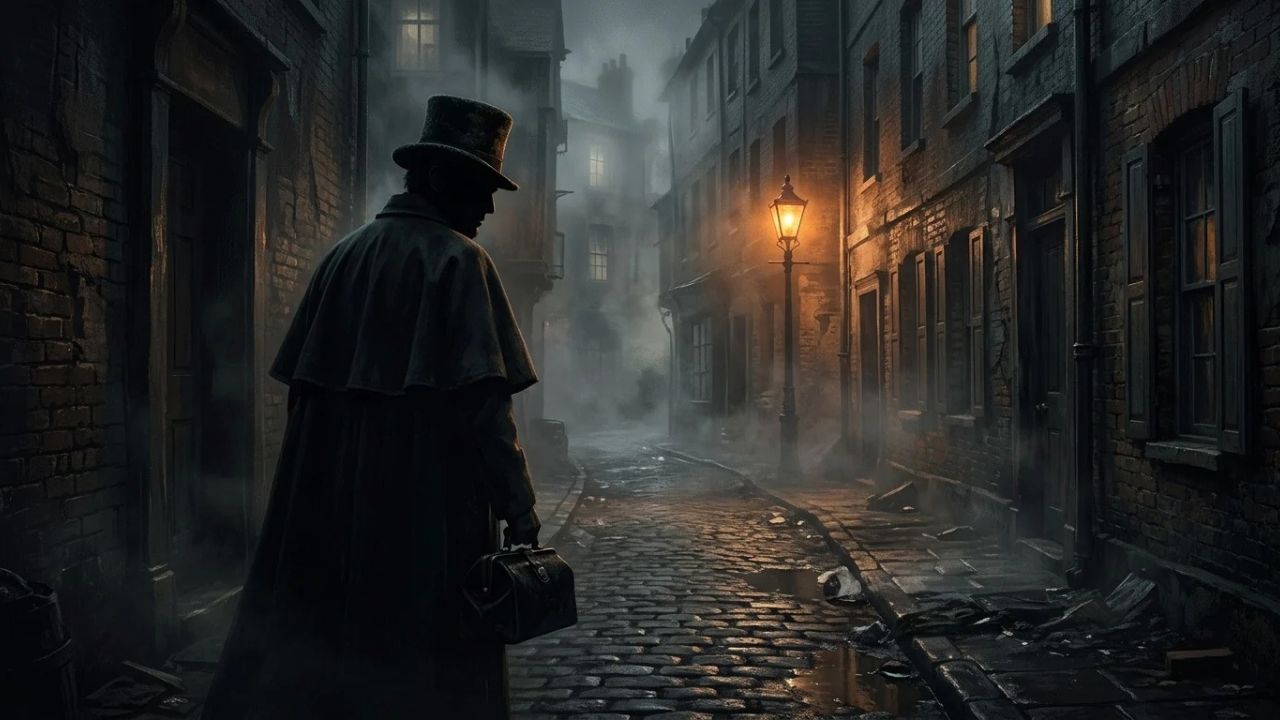
More than a century has passed since the gaslit, fog-choked alleyways of Victorian London echoed with the terrified screams of the destitute and the doomed. In the autumn of 1888, an elusive predator known to history only as Jack the Ripper paralyzed the East End of London, specifically the impoverished district of Whitechapel. For over 130 years, amateur sleuths, professional historians, forensic scientists, and conspiracy theorists have obsessed over the identity of the world’s most infamous serial killer. Yet, despite mountains of paperwork, thousands of books, and relentless cinematic dramatization, the ultimate truth remains shrouded in mystery. Or does it?
As modern investigative journalism merges with advanced forensic science, genetic genealogy, and deep-dive historical analysis, the veil masking the Ripper is beginning to slip. To understand the truth, we must peel back the layers of sensationalist Victorian journalism, examine the primary suspects, and look at what modern science actually tells us about the autumn of terror that changed criminal history forever.
📰 The Autumn of Terror: Setting the Stage in 1888
To comprehend the enigma of Jack the Ripper, one must step back into the grim reality of late-nineteenth-century London. The East End was a labyrinth of overcrowded slums, rotting tenements, rampant alcoholism, and desperate prostitution. Survival was a daily struggle, and for many women, selling their bodies on the dark streets was the only alternative to starvation or the dreaded workhouse.
Between August 31 and November 9, 1888, at least five women—collectively known as the “canonical five”—were brutally murdered and mutilated in and around Whitechapel. Their names were Mary Ann Nichols, Annie Chapman, Elizabeth Stride, Catherine Eddowes, and Mary Jane Kelly. The sheer savagery of the crimes, characterized by rapid throat slitting and precise post-mortem abdominal mutilations, sparked a media frenzy.
Newspapers such as The Illustrated London News and The Star capitalized on the horrific details, printing lurid accounts that fed public hysteria. It was during this media storm that a letter, purportedly written by the killer and signed in red ink with the moniker “Jack the Ripper,” was mailed to the Central News Agency. Whether the letter was penned by the actual murderer or by a sensationalist journalist looking to boost circulation is still heavily debated, but the name stuck, embedding itself permanently into the global lexicon of crime.
🔍 The Suspect Gallery: Myth, Madness, and Monarchy
Over the decades, hundreds of suspects have been proposed. Some theories are plausible, while others border on the absurd. The official police files of the Metropolitan Police, known as MEPO 3/140, highlight several individuals who were seriously considered by lead investigators like Inspector Frederick Abberline and Sir Robert Anderson.
Among the historical suspects, a few names consistently rise to the top:
- Aaron Kosminski: A Polish Jewish barber living in Whitechapel who suffered from severe mental illness and displayed violent misogynistic tendencies. He was named as a prime suspect by Chief Constable Sir Robert Anderson and Inspector Donald Swanson, though tangible, admissible evidence was notoriously lacking.
- Sir William Gull: Queen Victoria’s personal physician. Conspiratorial theories, popularized by books and films like From Hell, suggest a royal cover-up involving the British monarchy, Freemasonry, and an illegitimate royal child. Modern historians, however, largely dismiss this as sensational fiction devoid of archival backing.
- Walter Sickert: A prominent British painter whose dark, unsettling artwork and obsession with the murders led novelist Patricia Cornwell to argue he was the Ripper. While intriguing, forensic tests on letters attributed to Sickert have yielded deeply contested results.
- Michael Maybrick (or James Maybrick): A Liverpool cotton merchant whose purported “diary,” discovered in the 1990s, confessed to the murders. It was later widely exposed as a modern forgery, dealing a severe blow to the theory.
- Francis Tumblety: An eccentric, misogynistic American quack doctor living in London during the autumn of 1888. He was arrested for unrelated homosexual offenses, jumped bail, and fled to New York, prompting Scotland Yard detectives to briefly eye him with suspicion.
Despite exhaustive archival digs, none of these historical suspects could ever be definitively tied to the crimes through bulletproof physical evidence. The trail went cold, relegated to the dusty archives of Scotland Yard.
🧬 Modern Science Enters the Fog: DNA and Genetic Genealogy
As traditional historical methods hit a brick wall, the dawn of the twenty-first century introduced cutting-edge scientific techniques to the cold case. In recent years, researchers have attempted to apply mitochondrial DNA analysis to artifacts linked to the murders—most notably, a blood-stained silk shawl allegedly found beside the mutilated body of Catherine Eddowes.
Author and amateur researcher Russell Edwards purchased the shawl at an auction and submitted it to Dr. Jari Louhelainen, a molecular biologist at Liverpool John Moores University. Utilizing advanced DNA extraction techniques, the scientists claimed to have matched mitochondrial DNA from descendants of Aaron Kosminski and descendants of Catherine Eddowes to genetic traces found on the fabric.
However, the scientific community met these dramatic claims with rigorous skepticism. Critics pointed out that the shawl had passed through numerous hands over the decades, leading to severe contamination concerns. Furthermore, mitochondrial DNA is shared by entire maternal lineages, meaning a match points to a family group rather than an individual conclusively. Consequently, while Kosminski remains a leading historical suspect, absolute scientific certainty via DNA continues to elude researchers.
💰 The Price of Morbid Fascination: A Multi-Million Dollar Industry
The enduring obsession with Jack the Ripper is not merely an academic pursuit; it is a global economic powerhouse. The Whitechapel district today looks vastly different from the grim slums of 1888, replaced by trendy cafes, corporate offices, and modern apartments. Yet, the ghost of the Ripper still drives massive commerce.
Walking tours of Whitechapel draw hundreds of thousands of tourists annually, generating millions in revenue. If one were to calculate the aggregate global economic impact of Jack the Ripper across books, documentary films, video games, merchandise, academic conferences, and interactive museum exhibits over the last century, the figure easily surpasses $50,000,000 globally in equivalent modern value. For perspective, early twentieth-century memorabilia collectors would routinely pay upwards of $1,500 for original copies of the Police News detailing the murders—a small fortune at the time, which converts to over $25,000 in today’s adjusted economic terms.
This multi-million-dollar industry thrives on our collective psychological attraction to the macabre. The Ripper represents the archetypal shadow figure: anonymous, stealthy, operating in plain sight amidst the urban sprawl. He transformed the Victorian mindset, forcing society to confront the devastating human cost of extreme poverty, institutional neglect, and systemic violence against women.
🏁 Conclusion: Will We Ever Know the Truth?
More than 130 years after the terror of Whitechapel gripped Victorian London, the absolute identity of Jack the Ripper remains one of history’s greatest unsolved mysteries. While police suspects like Aaron Kosminski offer compelling profiles, and modern genetic testing pushes the boundaries of historical forensics, we may never possess the definitive smoking gun required to close the file forever.
Perhaps the true identity matters less than what the narrative represents. Jack the Ripper was a symptom of a diseased society, a manifestation of the darkness lurking in the shadows of the world’s most powerful empire. As long as humanity remains fascinated by the psychology of evil, the gaslights of Whitechapel will continue to flicker, keeping the legend of the world’s first celebrity serial killer perpetually alive in the dark corners of our collective imagination.